
Joe Wilson
BSocSc in Sociology (2024)
Joe is an AI Consultant at an insight and research business. He graduated from Manchester with a BSocSc in Sociology in 2024. Here, he talks about his career journey, how he moved from social research into AI, and how his time at Manchester helped him get there.
My current role
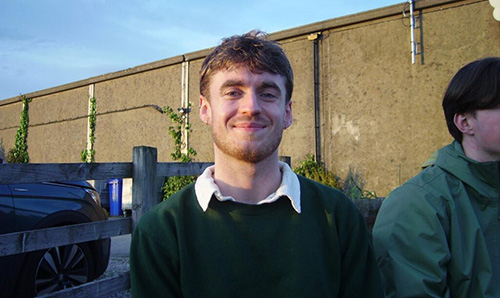
My name is Joe, I studied Sociology at Manchester, and I graduated back in 2024. Currently, I work as an AI Consultant at an insight and research business.
The company conducts research and gathers consumer data to help businesses better understand their customers and the markets they operate in, and I work within its relatively new AI team.
I work with insights teams from different companies to take everything they already know about their customers – research reports, surveys, data and other insights – and make that knowledge easier to access and apply to their work.
A big part of this involves building AI simulations that can work with all of that research, whether someone wants to understand a particular group of customers, develop a new idea, think through a marketing campaign or just find something they know exists in years’ worth of research. I like to think of it as helping the customer voice to always be there when decisions are being made, rather than only being heard during specific research sprints.
How I got into the role
Once I graduated, I knew I wanted to stay in Manchester, so I started applying for jobs here. I was looking for research jobs, and I landed a researcher role in a media insights agency that produced insights for TV for production companies and networks. I spent a year in this role from 2024 to 2025.
Around this time, I think AI started to become quite prevalent in the workplace, and I was on top of it because I had a lot of exposure to AI throughout university. I started making AI simulations for specific, repetitive tasks for different people within the team, which led to them creating an AI Committee.
I had been doing a lot of work with AI by then, and it was this experience that allowed me to start looking into the AI sector. That experience ended up being useful when I applied for my current role, because they were looking for someone who understood research, had a personal interest, and had spent time working with AI.
The application process for the role was interesting. I had to send a two-minute video of myself, and I remember the prompt was described as “treat this like meeting a friend at a coffee shop”. So, instead of a CV and cover letter, it was just an informal video telling them about myself, my experience, etc (of course, it took about a million retakes). And from there, I had two in-person interviews. For the first, they asked us to do a 5-minute presentation on a passion project we’ve done (my dissertation on gender representation in video games), and the second interview was more of a chat to see how I would fit in with the company.
My experience at Manchester
I came to Manchester from Wakefield because I liked how Manchester felt like a campus university, but it was also in the middle of the city rather than just random buildings scattered far from any central hub – and having Gay Village and the city centre a short walk away was compelling. I’ve always been interested in sociology, and the modules that Manchester offered for Sociology excited me. The course really focused on the people and the sociopolitical aspect of it all, which was what I wanted – I particularly remember Education in Society and Power & Protest being powerful.
I’d initially wanted to do a year abroad, but ended up deciding to do a placement year instead. After speaking with people at the university to get advice on applications, I applied to several roles, and I ended up getting a placement as a social researcher with HMRC. It involved social research to understand more about HMRC’s policies and their impact on the public.
I gained valuable soft skills, like presenting to a room full of people, email and Teams etiquette, and project management (as well as actual research, analysis and report-writing skills). Working within the civil service was great. I loved developing my research skills and being able to apply research for public good. I’m glad that I did it, and I would recommend that everyone does a placement year.
I’m really grateful that I studied Sociology, not just because of where it’s taken me professionally, but because of how much it changed the way I understand the world. I think one of the most valuable things it teaches you is to be curious about what sits behind the things we take for granted. When I see a statistic now, my first instinct is usually to ask where it came from, who was sampled, what might be missing and what it tells us. That way of thinking is incredibly useful in my job, but also just in life more broadly – for example, always question opinion polls!
My advice for future students
When I was studying sociology and speaking to family members or peers about it, they would joke that teaching sociology is the only job that will come from studying sociology. That’s rubbish – I think Sociology becomes more valuable, not less, as technology changes how we work.
AI can process huge amounts of information, but understanding people, lived experience, cultural context, behaviour and society is a different thing entirely. Being able to question what you’re seeing, understand where evidence comes from and think critically about people’s experiences matters in work, but it matters outside work too – and automation can’t replace that.