
Why Study Music at Manchester?
At a glance
- Study at a University ranked third in the UK for Music and Drama (Complete University Guide 2027).
- Hone your craft on the UK’s longest-running taught music degree, established in 1891.
- Explore the latest music technology in the award-winning NOVARS studios, with specialist facilities for creating and experimenting with sound.
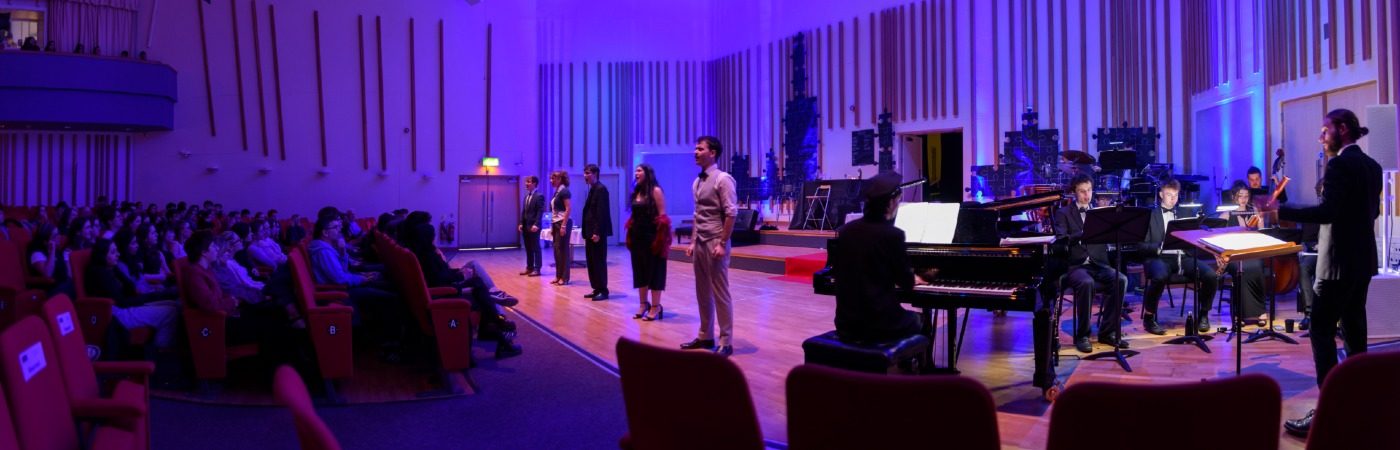
- Learn through experience, with 100+ concerts and events every year, including performances involving the resident Quatuor Danel and contemporary ensemble Psappha.
Video: Why Study a Humanities Degree at The University of Manchester?
Frequently asked study questions
Students enrolled on solo performance course units receive 18 hours of one-to-one instrumental or vocal tuition as part of their studies.
You’ll learn from experienced professional musicians, with instrumental and vocal tutors drawn from organisations including the Royal Northern College of Music (RNCM), Hallé and BBC Philharmonic, as well as other professional ensembles across the north west.
This expert tuition supports you in developing your performance skills alongside your wider academic study of music.
Find out more about performance opportunities and resident ensembles on our Performance page.
A Music degree can prepare you for a wide range of careers in the music industry and beyond. At The University of Manchester, you’ll develop creative, analytical, communication and research skills that can be applied to a variety of professional roles.
Depending on your interests and experience, you could pursue careers in:
- performance
- composition
- music production
- arts management
- teaching
- broadcasting
- music journalism
- publishing
- or the wider creative industries.
You could also use your degree as a foundation for further study or professional training.
A Music degree doesn’t limit you to one career path - it gives you the opportunity to develop your musical interests while building transferable skills valued by employers across many sectors.
Find out more about where your Music degree could take you on our graduate profiles page.
Our facilities include the Martin Harris Centre for Music and Drama, home to the 350-seat Cosmo Rodewald Concert Hall, the flexible John Thaw Studio Theatre, and dedicated rehearsal and practice spaces.
The Department also has a new practice room block, the Marian Millar Building, featuring 13 sound-isolated Amadeus M-Pods and a large ensemble practice space. You’ll have access to four Steinway grand pianos, specialist keyboard and percussion rooms, a harpsichord, a chamber organ, a fortepiano, and Javanese gamelan.
For students interested in electroacoustic composition, sound art, computer music and music technology, our award-winning NOVARS Research Centre provides specialist studios equipped with professional software and audio technology, including Pro Tools, Max, GRM Tools, IRCAM software and Unreal Engine.
Find out more on our Facilities page.