

Fear and Belonging in Minority Buddhist Communities
Research summary
- Fear is fundamental to human experience.
- It tends to be analysed as a negative and disempowering emotion, but it can also create solidarity and be a potent force for change.
- This project will investigate the productive role of fear in contemporary religious belonging through studies of two distinct minority Buddhist communities in the UK and Japan.
- This project is funded by a Leverhulme Trust Research Project Grant.
Project overview
This project aims to understand the role that fear plays in religious belonging and the maintenance and renewal of religious communities.
Fear is recognised as fundamental to human experience. In social sciences and humanities research, fear tends to be analysed as a negative and disempowering emotion and as a powerful political tool.
Fear can create collective ‘others’ and delineate boundaries between ‘minorities’ and ‘majorities’ and it can fuel culturally motivated violence. But it can also be a productive force, creating solidarity, enhancing group cohesion and generating change.
Fear and Belonging in Minority Buddhist Communities, funded by The Leverhulme Trust, investigates the productive role of fear in religious belonging and ongoing community formation, particularly in contexts where a community is minoritised.
The project
Drawing on the life stories of members of two minority Buddhist communities in the UK and Japan, the project analyses how emotions shape people’s negotiation, performance and experience of religious belonging, and the implications of this for the maintenance and renewal of religious communities.
Studying emotions, particularly ‘negative’ or difficult emotions like fear is challenging. We are therefore combining standard interview-based life story research with other narrative and visual methods to experiment with ways of communicating understandings and experiences of fear.
This includes working with an artist and the arts organisation FutureEverything to produce an online digital artwork.
We will present and publish the research findings in a range of formats, including publications aimed at different audiences. We are also working with an artist, Sian Fan, who will produce an online digital artwork.
Meet the team
The project includes academics, a UK-based arts organisation, and an artist.
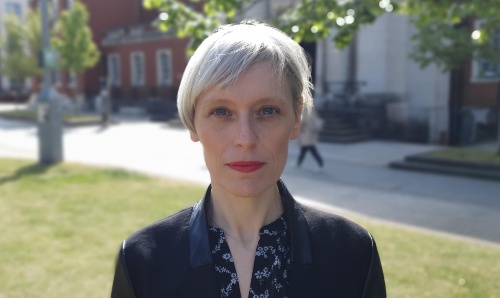
I am interested in religion in contemporary Japan, with a focus on groups founded from the 1970s onwards, and I have been conducting fieldwork in Japan for over twenty years.
My recent research projects focused on religion and media; new and minority religions; religion, gender and violence; and Buddhism and emotions.
I am co-editor, with Michael Stausberg (University of Bergen) and Alexander Van Der Haven (University of Bergen) of the open access publication Religious Minorities Online (De Gruyter).
You can read more about my research and publication on my research profile.
.jpg)
I am interested in intersections between religion, economy, morality, and emotion in contemporary Tibetan communities.
I have carried out extended fieldwork in northeast Tibet and have been engaging with the Tibetan community in the UK for over twenty years.
My recent research projects have focused on wealth and virtue, belonging and emotion, religious giving, and the revival and development of Tibetan monasteries.
You can read more about my research and publications on my research profile.
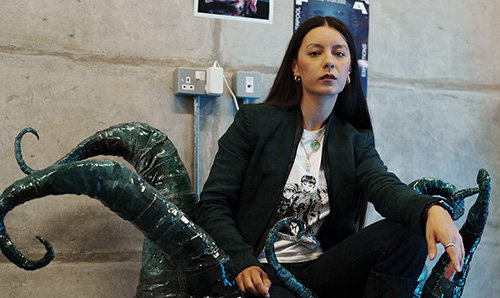
I am an award-winning interdisciplinary artist working between Essex and London where I am an artist in residence at Somerset House Studios.
I have exhibited internationally with institutions including Tate Modern, Mutek, FACT Liverpool, and the V&A, as well as producing work with Channel 4, the BBC and Meta.
My work combines movement, the body and technology to explore embodiment, identity, and human experience in the digital age. Coming from a mixed heritage (Chinese/British) my practice meditates on my tangled identity, exploring what it means to exist in between worlds.
Via my work I delve into my murky relationship with my own heritage, reflecting on diaspora, cultural imposter syndrome and the objectification of Asiatic bodies. I am particularly interested in the uneasy synchronicities between Asian and cyborgian bodies; in popularised depictions of Asiatic bodies in anime and video games; and in the thresholds of human identity where one exists as both and neither at the same time.
By extension I am fascinated by virtual identities, and in how we construct virtual bodies which we cast in hyperspace, extending beyond our physical bodies. I am concerned with the immaterial nature of spiritual and metaphysical identity and with being human in our increasingly digitised and hyperconnected world.
Through my work, I seek to discover new ways to coexist with technology.
Further information about my practice is available on my website.

Established in Manchester in 1995, FutureEverything is an award-winning innovation lab and cultural organisation that has helped shape the emergence of digital culture in Europe.
Through a curated programme of events, art commissions, critical conversations,collaborative projects and prototyping, FutureEverything stimulates new ways of thinking and is passionate about bringing people together to discover, share and experience new ideas for the future, creating opportunities to question and reflect on the world around us.
You can find out more information on their webiste.