
Key information
At the School of Social Sciences, Equality, Diversity and Inclusion (EDI) is embedded in our teaching, research, student support and workplace culture. We are committed to creating an inclusive academic community where students and staff feel respected, supported and able to thrive.
Student support, inclusion and wellbeing
We support students through practical initiatives that promote wellbeing, safety, belonging and access to an inclusive learning experience. This includes support for student carers, consent and respectful relationships education, curriculum diversification and funded EDI initiatives across the School.
SoSS Student Carer Support Plans
Student Carer Support Plans help students in the School of Social Sciences manage university study alongside significant caring responsibilities. These personalised plans provide tailored academic support and adjustments, helping student carers feel recognised, supported and able to succeed at The University of Manchester.
Student safety, consent and respectful relationships
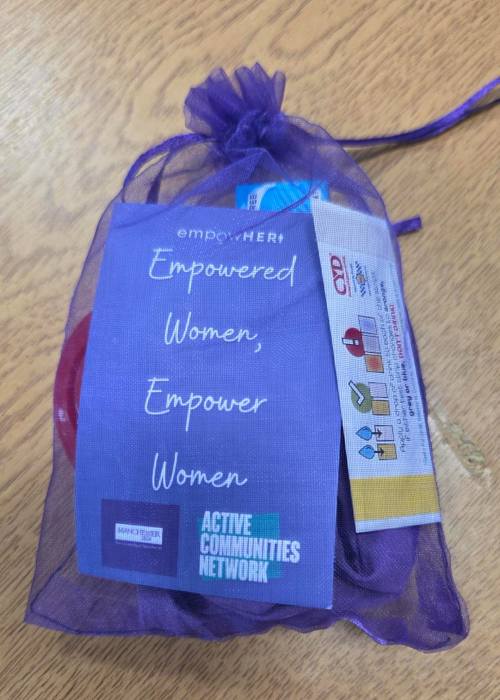
The School supports student safety and wellbeing through consent and respectful relationships workshops delivered during Welcome Week in collaboration with Active Communities Network.
These sessions help new students understand healthy relationships, recognise problematic behaviour, build bystander awareness and know where to access support across the University and the city.
Workshops are designed to create a safe, inclusive space for discussion around consent, personal safety, violence against women and girls, and respectful behaviour.
Students attending the workshops also receive a personal safety kit with practical resources and signposting to support services.
Diversifying the curriculum
The School funds projects that diversify the curriculum and enrich the student learning experience. This work supports inclusive teaching across the social sciences by broadening reading lists, introducing new perspectives, supporting student-led activity and embedding issues such as race, gender, disability, class, sexuality, colonialism and global inequality into course content.
Below you can view some examples of how academics have diversified their modules, also read Sophie’s blog on how the funding positively impacted her learning experience.
The course explores vision and the senses and there is a long-standing commitment to including a diversity of visual and sensory experiences in the course literature, lectures and tutorials. This includes focusing on a range of experiences of people, including those who blind, deaf, paraplegic or living with MND.
Funding enables the making of a short film by a student who had suffered a Traumatic Brain Injury and had to learn how to walk, speak and move again but who still experiences minor issues regarding speech processing, movement and sensory overload.
Content will explore how people learn how to re-inhabit their bodies in contexts of physical, moral or social disruption, focussing on the repertoire of strategies people employ.
Andrew Irving, Social Anthropology
The Politics Student-Staff BAME Network began in the Academic Year 2023/24.
A project has been funded to organise activities including creation of a work plan, contributing to the inclusive schools’ project, engaging with and representing BAME members of the politics’ student base, leading consultations with BAME members of the politics student base, co-chairing the Student-Staff BAME network to represent BAME members of the politics’ student base.
The project ensures the representation of BAME students and staff within the Politics DA's structures and processes through the student-staff BAME network.
By allowing the student chair of the network to have paid time to focus on the network’s priorities and processes, the project will assist in embedding the student-staff BAME network within the Politics department.
This will help to establish the representation of the BAME student and staff experiences and ideas as a core part of the Politics DA’s ethos and working practices in the future.
Luke Bhatia, Politics
This course unit is policy focused and brings together theory, research, policy and practice. Students learn first-hand from one of the most cited authors of hate crime literature.
One of the key themes of this module is inequality, and how intersecting socio-cultural oppressions are linked to perpetration and victimisation of violent crime, as well as criminal justice responses.
Hate crime is an important topic on the course, critically examining different forms of hate crime (for example, connected to race, ability, sexuality, gender-identity) and how they might best be responded to.
An international expert guest, from an ethnic minority background, who has lived experience of hate crime, delivers a workshop to students providing them with the opportunity to learn about various forms of hate crime that are directed at victims due to their (perceived) differences.
Caroline Miles, Criminology
Funded EDI initiatives
- Hidden Disability Lanyard Scheme support, with lanyards available to staff and students who need them.
- Free period products for users of School buildings, including Arthur Lewis Building, Humanities Bridgford Street, Williamson Building, Crawford House and the Justice Hub.
- Pronoun badges for staff and students, available through the Student Support Hub and on request.
Inclusive workplace culture and staff support
At the School of Social Sciences, we are committed to creating an inclusive workplace and learning environment where staff and students feel supported, respected and able to belong.
Our approach to equality, diversity and inclusion (EDI) includes:
- Supporting the University commitment as a Menopause Friendly Employer through our:
- Menospace meetups: informal drop-in sessions where staff and postgraduate students can connect, share experiences and exchange advice.
- SoSS MenoSpace: a dedicated digital space for sharing menopause resources, articles, reflections and wellbeing support.
- Bone density testing sessions: funded access to bone density scans for peri-menopausal and menopausal staff and postgraduate students.
- Menopause book collection: a curated collection of books to inform, empower and support people experiencing menopause directly or indirectly.
- Inclusive leadership development to support fairer routes into senior roles:
- Aurora, which supports women in higher education leadership;
- StellarHE, which supports Black, Asian and Minority Ethnic academic, research and professional staff;
- 100 Black Women Professors Now!, which supports equity of opportunity for Black women academics, researchers and PhD students.
- EDI training and mentoring to build confidence, awareness and inclusive practice. Training includes ‘Active Bystander’, ‘Unconscious Bias’ and ‘Disability Equity’.
- Staff networks and peer support that create spaces for connection, advice and shared learning.
- We are also dedicated to creating a family-friendly culture to help support parents and carers to balance work commitments with family life:
Staff (both academic and PS), Teaching Assistants (G/TAs) and PGR students are warmly invited to apply for funding of up to £500 to help with the associated costs of caring (including childcare or other caregiving costs) as a result of attending training and/or conferences. Early application is encouraged to ensure that sufficient funding is available.
Our parent room, situated in the Arthur Lewis Building – can be used for baby feeding or expressing, between 8.30am – 6pm. The room should not be used for any other purpose. There is no booking system. Please be patient if occupied. Alternative spaces and baby change facilities information can be found in the student parents guide and Maternity Toolkit (for staff).
The university has a wide range of policies and services to help support parents and carers, including information for carers (including those caring for adults), maternity leave toolkit and support, flexible working, and other supportive policies.
Athena Swan
Our School is proud to hold an Athena Swan Bronze award. The award demonstrates our continued commitment to progress and embed Equality, Diversity, and Inclusion in all that we do. Our Equality Diversity and Inclusion (EDI) agenda is now embedded in our governance structures and significant resources have been invested to support our work in these areas.
We have a dedicated office (Engagement and External Relations) to monitor the progress of our Action Plan, and our EDI Director is a member of the School Executive.
Our School and our Head of School have made it a priority to consolidate and extend a culture of gender equality across all areas of our activity. There is still work to be done within the School to further enhance the inclusivity of our workplace environment and improve representation of global majority and female staff colleagues at the higher pay grades/levels.
We also recognise the need to support female and global majority students to fulfil their potential and improve their employment opportunities. Addressing intersectional sources of inequality based on gender, race, disability and/or sexuality is critical in this endeavour.
Find out more details:
- Our commitment to the UK Athena Swan Principles
- Explore our latest staff and student facts and figures, which provide an overview of diversity across the School: