

Co-producing inclusive housing and care solutions with older LGBTQ people
Research summary
The research project investigated how to co-produce inclusive housing and care solutions for older LGBTQ people, a group disproportionally affected by social isolation and exclusion from mainstream services.
Using ethnographic and creative methods, the research documented the temporal, material, relational, spatial and affective aspects of LGBTQ housing and care experiences.
Research aims
This project laid the groundwork for a major funding bid addressing the unmet housing and care needs of older LGBTQ people.
It achieved this by:
- Generating insights on how to co-produce inclusive housing and care solutions by working with Kindred House, UK’s first purpose-built housing-with-care scheme for older LGBTQ people, currently being developed in Manchester.
- Advancing Creative Manchester’s aims concerning health and wellbeing via creative practice, drawing on social work and care aesthetics to understand innovations in social care.
- Critically engaging with design and place-making as co-produced processes with potential to both sustain and unsettle existing disciplinary distinctions and hierarchies.
- Enhancing and developing an interdisciplinary team of researchers and partners to build resources for future research.
Meet the team
- Principal investigator: Dharman Jeyasingham
- Research associate: Luciana Lang
- Stephen Hicks
- James Hodgson
- Tine Buffel
- Camilla Lewis
- James Thompson
- Joanna Barrow
- Arpana Verma
- Donna Sherman
- Emily Crompton
Funders and partner organisations
- The project was funded by the University of Manchester Research Institutes Pump Priming Fund.
- The project was also supported by partners from the LGBT Foundation and Great Places housing provider, by creative arts partners working independently, and by the curator of the map collection at the University of Manchester Library.
Events
The project ran 5 workshops to:
- Explore life course experiences through collaborative biographical interviewing (Temporal);
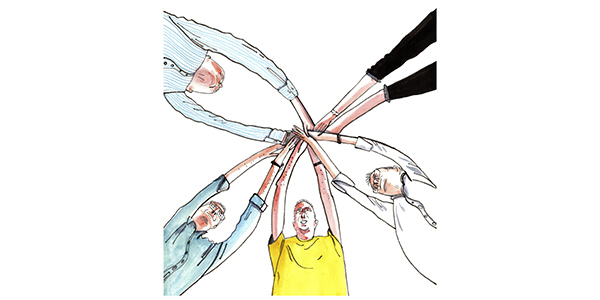
- Capture care interactions through movement and drama (Relational)
- Engage with objects to reflect on home and care (Material);
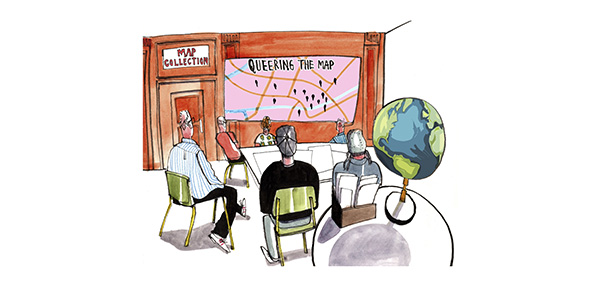
- Explore belonging and exclusion through map making (Affective),
- Use walking interviews and photo elicitation to capture experiences of place (Spatial);
A sketch artist, Len Grant, participated in these workshops, visually documenting participants' experiences.
Contact us
For further information, please contact dharman.jeyasingham@manchester.ac.uk or Luciana.lang@manchester.ac.uk.