
Japanese
See Japan from a different perspective.
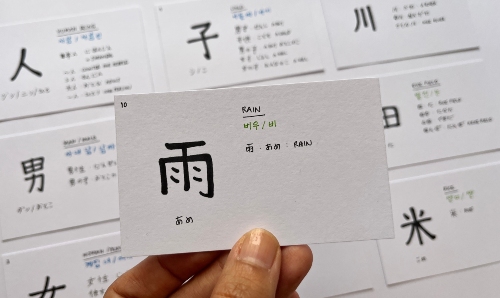
Japanese is spoken by more than 120 million people and is closely associated with a country known internationally for technology, business, the arts and popular culture.
Learning Japanese can reveal details that translation may miss, from familiar expressions and social conventions to the way people interact in daily life.
It can give you a closer understanding of Japan, its traditions and modern society.
Our courses will help you make sense of more of what you hear and read and find your own ways to express yourself.
Whether you’re a complete beginner or already have some knowledge, you can choose an option that reflects your experience.
Available study options:
- Full-year study – two semesters (September to May), with 3-contact hours per week.
- Semester 2 study – 12-week introductory courses.
All classes are taught on campus.
Levels available range from absolute beginner to B2 standard as per the Common European Framework.
Full-year study courses
Course overview
- Credits: 20
- Pre-requisite: This unit is suitable for those who have never studied Japanese before.
- Co-requisite: If you are studying a Modern Languages Degree, either single or joint honours, please refer to relevant guidance about eligibility for LEAP units on your programme structure.
- Taught during: Both semesters (September to May).
- Level of attainment: (A1) By the end of the course, students should be able to perform at Level A1 of the Common European Framework.
- Timetable: See timetable information
Course description
This course is for absolute beginners. It is designed for those who wish to attain a basic understanding of the Japanese language covering four skills: listening, speaking, reading and writing.
It aims to introduce students to the rules of pronunciation, the basics of language structure and the basics of Japanese grammar.
The course will also introduce students to the syllabic hiragana and katakana scripts and the kanji characters.
Students will also acquire limited vocabulary to be able to read simple texts and conduct basic everyday conversation in key areas of everyday communication.
Learning outcomes
Upon successful completion of the course, students should be able to:
- handle some of the basic grammatical structures of Japanese;
- understand and read some familiar and daily expressions used in common everyday situations and write simple messages with the syllabic hiragana and katakana scripts and begin to acquire kanji characters;
- communicate orally at a basic level in a limited number of common everyday situations;
- have some understanding and knowledge of ways of Japan life & culture.
By the end of the course, students should be able to perform at Level A1 of the Common European Framework.
Transferable skills
Pair and team work, focussed listening, informal presentations, language awareness, and cultural appreciation.
Teaching and learning methods
One three-hours or two 90 minutes seminars per week, delivered through blended learning which integrates on campus and on-line instruction as necessary.
This will also include online digital learning available via the university VLE platform and will be supplemented by extra online resources to aid students in their independent learning.
Teaching hours
69 hours (3 hours per week) including assessment time.
Independent study hours
131 hours (not including assessment time).
Assessment
All assessments are summative.
Non-credit students and members of the public need to be aware that written exams will not take place during lesson time.
Semester 1
- Written exam; 30% weighting; held in university's Semester 1 exam period in January
Semester 2
- Speaking exam; 40% weighting; held in week 12
- Written exam; 30% weighting; held in university's Semester 2 exam period in May/June
Dates to be confirmed.
Nature and timing of feedback
Feedback will include a combination of informal ongoing feedback resulting from class-based learning activities and formal written feedback given following summative assessments.
Convenor
Mikiko Inoue
Taught by
Japanese LEAP tutors
Maximum entry
23 per group
Set texts
Genki 1 Lesson 1 - Lesson 7. Third Edition (Japan Times). ISBN-13: 978-4789017305
Next pathway
ULJA51020 - LEAP Japanese 2 (A1/A2)
Course overview
- Credits: 20
- Pre-requisite: ULJA51010 - LEAP Japanese 1 (A1) or equivalent e.g. GCSE grade 4 or 5 taken in the last 3 years.
- Co-requisite: If you are studying a Modern Languages Degree, either single or joint honours, please refer to relevant guidance about eligibility for LEAP units on your programme structure.
- Taught during: Both semesters (September to May).
- Level of attainment: (A1/A2) By the end of the course, students should be able to perform at Level A1/A2 of the Common European Framework.
- Timetable: See timetable information
Course description
This course is designed for students who already have some knowledge of the Japanese language and have a basic understanding of the grammar system.
The course aims to develop skills acquired in ULJA51010 - LEAP Japanese 1 (A1) in speaking, listening, reading and writing. It lays emphasis on communication and comprehension skills but also builds on the fundamentals of grammar already acquired.
The course introduces students to a wider range of vocabulary to enable them to read longer texts and conduct a more general everyday conversation in familiar topics of everyday communication in Japan.
Topics covered in ULJA51010 - LEAP Japanese 1 (A1) will be revised and extended and new themes will be introduced which will develop understanding of the society and culture of Japan.
Learning outcomes
Upon successful completion of the course, students should be able to:
- demonstrate better understanding and knowledge of key grammar points with appropriate usage;
- demonstrate reasonable competency in comprehension and listening through accurately extracting key information from written and audio sources on specific familiar topics;
- communicate orally in simple, routine situations and handle short social exchanges about familiar topics;
- independently write short texts on limited familiar topics.
By the end of the course, students should be able to perform at Level A1/A2 of the Common European Framework.
Transferable skills
Pair and team work, focussed listening, informal presentations, language awareness, and cultural appreciation.
Teaching and learning methods
One three-hours or two 90 minutes seminars per week, delivered through blended learning which integrates on campus and on-line instruction as necessary.
This will also include online digital learning available via the university VLE platform and will be supplemented by extra online resources to aid students in their independent learning.
Teaching hours
69 hours (3 hours per week) including assessment time.
Independent study hours
131 hours (not including assessment time).
Assessment
All assessments are summative.
Non-credit students and members of the public need to be aware that written exams will not take place during lesson time.
Semester 1
- Written exam; 30% weighting; held in university's Semester 1 exam period in January
Semester 2
- Speaking exam; 40% weighting; held in week 12
- Written exam; 30% weighting; held in university's Semester 2 exam period in May/June
Dates to be confirmed.
Nature and timing of feedback
Feedback will include a combination of informal ongoing feedback resulting from class-based learning activities and formal written feedback given following summative assessments.
Convenor
Motoi Kitamura
Taught by
Motoi Kitamura
Maximum entry
23 per group
Set texts
Genki 1 Lesson 8 - Lesson 12. Third Edition (Japan Times). ISBN-13: 978-4789017305
Genki 2 L13 – L15. Third Edition (Japan Times). ISBN-13: 978-4789017329
Genki 1 Third Edition (Japan Times) Workbook. ISBN-13: 978-4789017312
Genki 2 Third Edition (Japan Times) Workbook. ISBN-13: 978-4789017336
Next pathway
ULJA 51030 - LEAP Japanese 3 (A2/B1)
Course overview
- Credits: 20
- Pre-requisite: ULJA51020 - LEAP Japanese 2 (A1/A2) or equivalent e.g. GCSE Grade 6 or above taken in the last three years or JLPT N5.
- Co-requisite: If you are studying a Modern Languages Degree, either single or joint honours, please refer to relevant guidance about eligibility for LEAP units on your programme structure.
- Taught during: Both semesters (September to May).
- Level of attainment: (A2/B1) By the end of the course, students should be able to perform at Level A2/B1 of the Common European Framework.
- Timetable: See timetable information
Course description
The course aims to further develop the skills acquired in LEAP Japanese 1 & 2.
It extends the emphasis on communication and comprehension skills through the use of high frequency language expressions used to describe topics of personal interest, current affairs and specific themes.
This will enable students to conduct brief oral exchanges related to limited specific topics or themes or to give a short presentation or information about an event.
It also further consolidates the grammar already acquired, and enhances students’ skills in reading and writing by equipping them with a broader range of vocabulary to enable them to read and write longer and more complex texts.
Learning outcomes
Upon successful completion of the course, students should be able to:
- demonstrate a deeper understanding grammatical rules;
- demonstrate competency in comprehension and listening through accurately extracting key information from written and audio sources on specific familiar topics related to personal interest and current affairs;
- recognize and use known expressions and fundamental phrases that are used in everyday situations;
- communicate orally in simple, routine situations and handle short social exchanges about familiar topics with reasonable fluency;
- independently write short texts on limited familiar topics using a variety of vocabulary and formulaic expressions.
By the end of the course, students should be able to perform at Level A2/B1 of the Common European Framework.
Transferable skills
Pair and team work, focussed listening, informal presentations, language awareness, cultural appreciation.
Teaching and learning methods
One three-hours or two 90 minutes seminars per week, delivered through blended learning which integrates on campus and on-line instruction as necessary.
This will also include online digital learning available via the University VLE platform and will be supplemented by extra online resources to aid students in their independent learning.
Teaching hours
69 hours (3 hours per week) including assessment time.
Independent study hours
131 hours (not including assessment time).
Assessment
All assessments are summative.
Non-credit students and members of the public need to be aware that written exams will not take place during lesson time.
Semester 1
- Written exam; 30% weighting; held in university's Semester 1 exam period in January
Semester 2
- Speaking exam; 40% weighting; held in week 12
- Written exam; 30% weighting; held in university's Semester 2 exam period in May/June
Dates to be confirmed.
Nature of the feedback
Feedback will include a combination of informal ongoing feedback resulting from class-based learning activities and formal written feedback given following summative assessments.
Convenor
Chikako Haworth
Taught by
Chikako Haworth
Maximum entry
23 per group
Set texts
Genki 2 L16 - L23. Third Edition (Japan Times). ISBN-13: 978-4789017329
Next pathway
ULJA51040 - LEAP Japanese 4 (B1)
Course overview
- Credits: 20
- Pre-requisite: ULJA51030 - LEAP Japanese 3 (A2/B1) or JLPT N4.
- Co-requisite: If you are studying a Modern Languages Degree, either single or joint honours, please refer to relevant guidance about eligibility for LEAP units on your programme structure.
- Taught during: Both semesters (September to May)
- Level of attainment: (B1) By the end of the course, students should be able to perform at Level B1 of the Common European Framework.
- Timetable: See timetable information
Course description
This course is for students who have successfully completed ULJA51030 - LEAP Japanese 3 (A2/B1) or equivalent and wish to take their Japanese to the next level.
The course offers the solid foundation required for achieving language competency with the use of further grammatical structures of the Japanese language and challenging longer texts and conversations.
The course provides an extensive range of vocabulary which will enable students to communicate reasonably fluently and effectively, both orally and in writing, and enable them to produce clear, well-structured written texts on a wide variety of subjects.
Communication skills will be developed include discussion, presentation skills and reporting skills, in addition to covering more aspects of the culture of and current issues in Japan.
Learning outcomes
Upon successful completion of the course, students should be able to:
- demonstrate competency in understanding and knowledge of language structure grammatical rules;
- understand a wide variety of high demanding longer texts and conversations, and recognize implicit meaning;
- engage in spontaneous conversations and discussions on familiar topics with some fluency;
- independently write short essays, reports and letters putting forward personal points of view by using a variety of vocabulary and formulaic expressions and using the target language in a wide range of contexts.
By the end of the course, students should be able to perform at Level B1 of the Common European Framework.
Transferable skills
Pair and team work, focussed listening, informal presentations, language awareness, and cultural appreciation.
Teaching and learning methods
One three-hours or two 90 minutes seminars per week, delivered through blended learning which integrates on campus and on-line instruction as necessary.
This will also include online digital learning available via the university VLE platform and will be supplemented by extra online resources to aid students in their independent learning.
Teaching hours
69 hours (3 hours per week) including assessment time.
Independent study hours
131 hours (not including assessment time).
Assessment
All assessments are summative.
Non-credit students and members of the public need to be aware that written exams will not take place during lesson time.
Semester 1
- Written exam; 30% weighting; held in university's Semester 1 exam period in January
Semester 2
- Speaking exam; 40% weighting; held in week 12
- Written exam; 30% weighting; held in university's Semester 2 exam period in May/June
Dates to be confirmed.
Nature and timing of feedback
Feedback will include a combination of informal ongoing feedback resulting from class-based learning activities and formal written feedback given following summative assessments.
Convenor
Motoi Kitamura
Taught by
Motoi Kitamura
Maximum entry
23 per group
Set texts
QUARTET 1 Intermediate Japanese Across The 4 Language Skills
Japan Times
ISBN: 978-4-7890-1695-7
QUARTET 1 Intermediate Japanese Across The 4 Language Skills Workbook
Japan Times
ISBN: 978-4-7890-1696-4
Recommended texts
Oxford Starter Japanese dictionary (ISBN: 0198601972) OR Oxford Kenkyusha Japanese Learner dictionary, and Oxford Japanese Grammar and Verbs (ISBN: 0198603827).
More information at the Oxford University Press website.
More advanced dictionaries and grammar books may be appropriate.
Advice from tutors.
Next pathway
For information on further Japanese contact the course convenor.
Semester 2 courses
Classes start week commencing 1st February 2027.
Course overview
- Credits: 10
- Pre-requisite: None.
- Co-requisite: Open to students not following Honours courses in Japanese. If you are studying a Modern Languages Degree, either single or joint honours, please refer to the course unit selection guidance, which includes information about eligibility for LEAP units, on your programme structure.
- Anti-requisite: Students taking the unit for university credit as part of their degree must not have already taken the unit ULJA51010 - LEAP Japanese 1 (A1).
- Taught during: Semester 2 (January - May)
- Level of attainment: (A1.1) By the end of the course, students should be able to perform at Level A1.1 of the Common European Framework.
- Timetable: See timetable information.
Course description
This course is for absolute beginners. It introduces students to the fundamentals of Japanese grammar, reading and writing while developing some basic communicative skills.
It aims to teach students simple structures, lexis and phrases which will enable them to communicate in a limited number of common everyday situations in Japan.
This will be achieved through learning ‘Romaji’ (rōmaji), a system of romanized spelling used to transliterate Japanese. The course will also introduce students to the syllabic hiragana scripts. Both Romaji and hiragana scripts will be used in assessment.
The introductory course differs from ULJA51010 - LEAP Japanese 1 (A1) in length, topics covered and learning outcomes.
Both start at the same level (absolute beginner), but LEAP Japanese 1 is a full-year course, and goes further and deeper into the language as it is approximately double the number of teaching hours plus double the number of self-study hours whereas the introductory level ULJA51002 - Introduction to Japanese (A1.1) is only one semester long.
Learning outcomes
Upon successful completion of the course, students should be able to:
- handle some of the basic grammatical structures of Japanese;
- understand and read some familiar and daily expressions used in common everyday situations and write very simple words/messages with the use of Romaji; and hiragana;
- communicate orally at a basic level in a limited number of common everyday situations;
- have some understanding of ways of life in Japan.
Perform at Level A1.1 of the Common European Framework.
Transferable skills
Pair and team work, focussed listening, informal presentations, language awareness, and cultural appreciation.
Teaching and learning methods
One three-hours or two 90 minutes seminars per week, delivered through blended learning which integrates on campus and on-line instruction as necessary.
This will also include online digital learning available via the university VLE platform and will be supplemented by extra online resources to aid students in their independent learning.
Teaching hours
36 hours (3 hours per week) including assessment time.
Independent study hours
64 hours (not including assessment time).
Assessment
All assessments are summative.
Non-credit students and members of the public need to be aware that written exams will not take place during lesson time.
Semester 2
- Speaking exam; 40% weighting; held in week 12
- Written exam; 60% weighting; held in May/June, during the University exams period
Dates to be confirmed.
Nature and timing of feedback
Feedback will include a combination of informal ongoing feedback resulting from class-based learning activities and formal written feedback given following summative assessments.
Convenor
Mikiko Inoue
Taught by
Mikiko Inoue
Maximum entry
23 per group
Set texts
TBC
Next pathway
Fee-paying students can move on to the ULJA51010 - LEAP Japanese 1 (A1), but should note that much of the material will be a repeat of the introductory unit. For the same reason, degree students cannot take ULJA51010 - LEAP Japanese 1 (A1) for degree credits if they have already completed ULJA51002 - Introduction to Japanese (A1.1).
Students may be able to proceed to ULJA51020 - LEAP Japanese 2 (A1/A2) subject to:
- achieving a mark over 80%
- agreeing to study independently the material recommended by the language tutor to reach the Common European Framework level required at the end of LEAP Japanese 1 (A1)
- an entry-level assessment carried out by the tutor.
By taking this option students agree to cover the material recommended by the language tutor independently. They will be taking this at their own risk. Once they have enrolled on the course, they are not allowed to move back to ULJA51010 - LEAP Japanese 1 (A1) or ask for a refund.
Timetables – 2026/27
Please note the timetable is subject to change up to and including the start of courses. Please check these pages regularly and check your personal timetable ahead of classes.
Find your classrooms and make your way around campus quickly with our interactive map.
Courses are taught in 2 or 3 hour sessions – view the timetables below:
Course code: ULJA51002/ULJA50002/ULJA90002
- Group 1:
- Tuesday, 3–4.30pm – Roscoe_3.9
- Thursday, 3–4.30pm – Alan Turing_G.113
- Group 2: Thursday, 5.30–8.30pm – Sam Alex_A214
Please note this course runs in Semester 2 only and is worth 10 credits.
Course code: ULJA51010/ULJA71010/ULJA50010/ULJA90010
- Group 1: Thursday, 10am–1pm – Sam Alex_S3.24; Mansfield Cooper_2.14 (Semester 2, weeks 26–34)
- Group 3: Tuesday, 5.30–8.30pm – Sam Alex_A104
- Group 4: Wednesday, 2–5pm – Mansfield Cooper_1.02
- Group 5: Thursday, 5.30–8.30pm – Sam Alex_A104
- Group 6: Wednesday, 2–5pm – Mansfield Cooper_2.14
- Group 7:
- Tuesday, 4–5pm – Sam Alex_A18
- Thursday, 3–5pm – Booth Street East_G.04
Course code: ULJA51020/ULJA71020/ULJA50020/ULJA90020
- Group 1: Tuesday, 5.30–8.30pm – Sam Alex_A116
- Group 2: Wednesday, 1–4pm – Sam Alex_A213A
Course code: ULJA51030/ULJA71030/ULJA50030/ULJA90030
- Tuesday, 5.30–8.30pm – Sam Alex_A214
Course code: ULJA51040/ULJA71040/ULJA50040/ULJA90040
- Monday, 5.30–8.30pm – Sam Alex_A213A
If you have any questions or need more information, please contact us by phone or email leap@manchester.ac.uk.