
Turkish
Start your first conversations in Turkish.
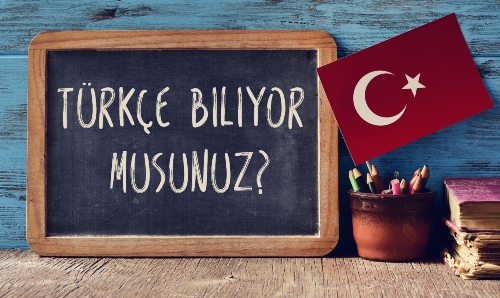
If you’re interested in Türkiye, knowing some Turkish can change your experience of being there.
It can make it easier to interact with people, understand aspects of daily life and strengthen ties with Turkish-speaking friends or family.
Designed for complete beginners, the course introduces the essentials so you can recognise familiar expressions, read simple texts and begin having short exchanges in Turkish.
By the end of the course, you'll be able to perform at CEFR A1 level and will have gained an introduction to Turkish life and culture, helping you communicate in a limited range of everyday situations.
Available study option:
- Full-year study – two semesters (September to May), with 3 contact hours per week.
All of our classes are taught on campus.
Full-year study course
Course overview
- Credits: 20
- Pre-requisite: This unit is suitable for those who have never studied Turkish before.
- Co-requisite: If you are studying a Modern Languages Degree, either single or joint honours, please refer to relevant guidance about eligibility for LEAP units on your programme structure.
- Taught during: Both semesters (September to May).
- Level of attainment: (A1) By the end of the course, students should be able to perform at Level A1 of the Common European Framework.
- Timetable: See timetable information
Course description
This course is for absolute beginners. It is designed for those who wish to attain a basic understanding of the Turkish language covering four skills: listening, speaking, reading and writing.
It aims to introduce students to the Turkish alphabet, the basics of language structure and the basics of Turkish grammar. Students will also acquire limited vocabulary to be able to read simple texts and conduct basic conversation in key areas of everyday communication.
The course provides students with a solid foundation for further language learning.
Learning outcomes
Upon successful completion of the course, students should be able to:
- handle some of the basic grammatical structures of Turkish;
- understand and read some familiar and daily expressions used in common everyday situations and write very simple messages;
- communicate orally at a basic level in a limited number of common everyday situations;
- have some understanding and knowledge of ways of Turkish life and culture.
By the end of the course, students should be able to perform at Level A1 of the Common European Framework.
Transferable skills
Pair and teamwork, focussed listening, informal presentations, language awareness, and cultural appreciation.
Teaching and learning methods
One three-hours or two 90 minutes seminars per week, delivered through blended learning which integrates on campus and on-line instruction as necessary.
This will also include online digital learning available through the University VLE platform and will be supplemented by extra online resources to aid students in their independent learning.
Teaching hours
69 hours (3 hours per week) including assessment time.
Independent study hours
131 hours (not including assessment time).
Assessment
All assessments are summative.
Non-credit students and members of the public need to be aware that written exams will not take place during lesson time.
Semester 1
- Written exam; 30% weighting; held in university's Semester 1 exam period in January
Semester 2
- Speaking exam; 40% weighting; held in week 12
- Written exam; 30% weighting; held in university's Semester 2 exam period in May/June
Dates to be confirmed.
Nature and timing of feedback
Feedback will include a combination of informal ongoing feedback resulting from class-based learning activities and formal written feedback given following summative assessments.
Convenor
Justyna Drobnik-Rogers
Taught by
Maximum entry
23 per group
Set text
- Complete Turkish, Beginners to Intermediate course. David Pollard, Asuman Çelen Pollard
Next pathway
None
Timetables – 2026/27
Please note the timetable is subject to change up to and including the start of courses. Please check these pages regularly and check your personal timetable ahead of classes.
Find your classrooms and make your way around campus quickly with our interactive map.
Courses are taught in 2 or 3 hour sessions – view the timetables below:
Course code: ULTU51010/ULTU71010/ULTU50010/ULTU90010
- Wednesday, 5.30–8.30pm – Sam Alex_A213A
Student testimonials
Ben, a member of the public, studied LEAP Turkish 1.
Why did you choose to study a language at The University of Manchester?
I had known a few people who had been to The University of Manchester and they had nothing but praise for it, so thought I would give it a try once I had found the course I was looking for.
Apart from class time, how much time did you spend a week on your studies?
Around 8-10 hours a week. I try to listen to as much Turkish music as I can, and my tutor also gave me a few different Turkish TV series to watch so I try to spend some of my time watching those as well.
How did you find your course in terms of level?
As it was a beginners' class, I felt that everything was fairly simple to get my head around once it had been explained. There were a few challenging exceptions but I enjoyed working those out.
I imagine it's the same with all new languages - the more you learn, the more difficult you might find it - but that's all part of the fun.
What did you most enjoy about your course?
I met and made some great friends, we had some good laughs.
I enjoyed expanding my knowledge of the language and learning more about Turkish culture. Each time I came away from a class I found myself more and more motivated to learn and remember what we had been taught.
When it came round to the exams, I really wanted to be as prepared as I could by using the new learned knowledge.
Have you been able to put your newly acquired language skills to use outside the classroom? If so, please tell us how.
I speak Turkish to my girlfriend quite often, although she's Australian and doesn't understand much.
I've got a few friends on Facebook that I speak to in Turkish and they were really impressed at how much I had learnt during the course. I'm travelling to Turkey over the summer so I'm sure I'll be able to use what I have learnt there.
If you have any questions or need more information, please contact us by phone or email leap@manchester.ac.uk.