
French 1 for Healthcare
Prepare to use French in healthcare settings.
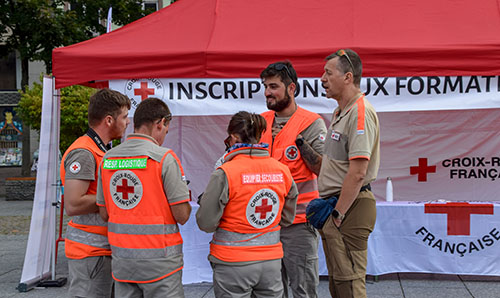
Develop the French language skills needed to communicate more confidently in healthcare settings.
Whether you're preparing for a placement, supporting French-speaking patients or looking to enhance your professional development, this course combines practical language learning with healthcare-focused communication.
You’ll work through realistic scenarios, become familiar with relevant terminology and consider the cultural awareness needed when interacting with patients and colleagues. The focus is on using what you learn in situations you may encounter in healthcare.
Available study options:
- Full-year study – two semesters (September to May), with 3-contact hours per week.
All classes are taught online.
Levels available range from absolute beginner to B2 standard as per the Common European Framework.
Full-year study course (online)
Course overview
- Codes: ULHF50010, ULHF90010
- Credits: NC (Payable)
- Pre-requisite: A level French grade B/A taken in the last three years or equivalent
- Taught during: Both semesters (September to May).
- Method of delivery: Online
- Level of attainment: (B2) By the end of the course, students should be able to perform at Level B2 of the Common European Framework with French basic medical specialised terminology.
- Timetable: See timetable information
Course description
This specialised course is tailored for those working or interested in the healthcare industry and seeking to enhance their French language skills for use in this sector.
The course is designed to meet the communication needs of doctors, nurses, pharmacists, therapists, other healthcare workers and those studying for these professions.
It covers basic essential medical vocabulary, patient interaction, and healthcare documentation.
Through practical exercises, role-plays, and case studies, participants will improve their ability to engage in culturally sensitive, patient-centred communication and handle a range of clinical situations in French-speaking environments.
The course will improve their confidence and fluency when interacting with French-speaking patients and colleagues.
General topics covered
- Medical Vocabulary and Terminology: Anatomy, symptoms, diseases, treatments, and medications
- Patient Interaction and Communication: Greeting patients, asking about symptoms, and explaining medical conditions
- Taking Medical History: Gathering patient information, including allergies, medications, and family history
- Explaining Procedures and Treatments: Describing diagnostic tests, treatment plans, and follow-up care
- Emergency Situations: Essential phrases and commands for urgent care scenarios
- Patient Instructions: Providing clear post-treatment advice and medication instructions
- Healthcare Documentation: Filling out patient records, writing prescriptions, and completing medical reports
- Cultural Competence in Healthcare: Understanding French-speaking patients’ cultural expectations and sensitivities
- Medical Ethics and Confidentiality: Discussing patient rights and confidentiality in French
Learning outcomes
Upon successful completion of the course, students should be able to:
- Use basic specialised medical French vocabulary to discuss common symptoms, diagnoses, and treatments.
- Conduct basic patient interviews and consultations in French, including taking comprehensive medical histories.
- Explain basic medical procedures, diagnostic tests, and treatment plans in a patient-friendly manner.
- Complete healthcare documentation in French, including patient charts, prescriptions, and discharge summaries.
- Navigate cross-cultural communication challenges and demonstrate cultural competence in French-speaking healthcare environments.
By the end of the course, students should be able to perform at Level B2+ of the Common European Framework with French basic medical specialised terminology.
Transferable skills
Pair and team work, focused listening, informal presentations, language awareness, cultural appreciation.
Teaching and learning methods
Two hours of live, face-to-face instruction – Real-time learning and practice (live sessions are not recorded in compliance with data protection best practices) delivered online.
This will also include online digital learning available via the university VLE platform and will be supplemented by extra online resources to aid students in their independent learning.
Data Protection Notice:
- Live sessions operate under a no-recording policy to protect participant confidentiality and encourage open participation.
- For full details, please refer to The University of Manchester’s Data Protection Policy.
Teaching Hours
46 hours (2 hours per week) including assessment time. Week 6 is a non-teaching reading week for independent learning.
Independent Study Hours
96 hours (not including assessment time)
Assessment:
Semester 1
- Online written exam; 30 % weighting; held in week 12- Dates will be confirmed
Semester 2
- Online speaking exam (or equivalent ); 30% weighting; held in week 11- (Medical Topic)
- Online written exam; 40% weighting; dates will be confirmed. held in week 12- Dates will be confirmed
Nature and timing of feedback
Feedback will include a combination of informal ongoing feedback resulting from class-based learning activities and formal written feedback given following summative assessments.
Convenor
Gaelle Flower
Taught by
Gaelle Flower
Maximum entry
20 per group
Set texts
TBC
Recommended texts
TBC
Next pathway
None
Timetables - 2026/27
Please note the timetable is subject to change up to and including the start of courses. Please check these pages regularly and check your personal timetable ahead of classes.
Find your classrooms and make your way around campus quickly with our interactive map.
Courses are taught in 2 or 3 hour sessions.
LEAP French 1 for Healthcare is delivered online.
- Tutor: Gaelle Flower
- Wednesday 5pm - 7pm
Student testimonial
The LEAP French for Healthcare course has taught me many skills. I have really enjoyed coming out of my comfort zone and growing in confidence speaking French more spontaneously. I would really recommend a LEAP language course as in learning another language, it's as if you are unlocking another part of yourself where you have gained many skills and there is a whole community of people you are able to support with their wants and needs.
Enayah / LEAP French for Healthcare student
If you have any questions or need more information, please contact us by phone or email leap@manchester.ac.uk.